





International academic mobility under the ISDEGO project – Sustainable Urban Development Goals in Transport Bachelor Degree, Erasmus+ programme, to the University of Applied Sciences (Hochschule Wismar, HSW) in the city of Wismar, Germany
From 17 to 21 November 2025, representatives of the National Transport University took part in an international academic mobility programme held at Wismar University of Applied Sciences (HOCHSCHULE WISMAR, Germany) within the ISDEGO project – Sustainable Urban Development Goals in Transport Bachelor Degree under the Erasmus+ programme. The mobility focused on studying modern European practices in the implementation of micro-credits and micro-qualifications, the development of digital innovations, university cooperation with business and local authorities, as well as learning about advanced technologies for modelling transport and maritime systems.
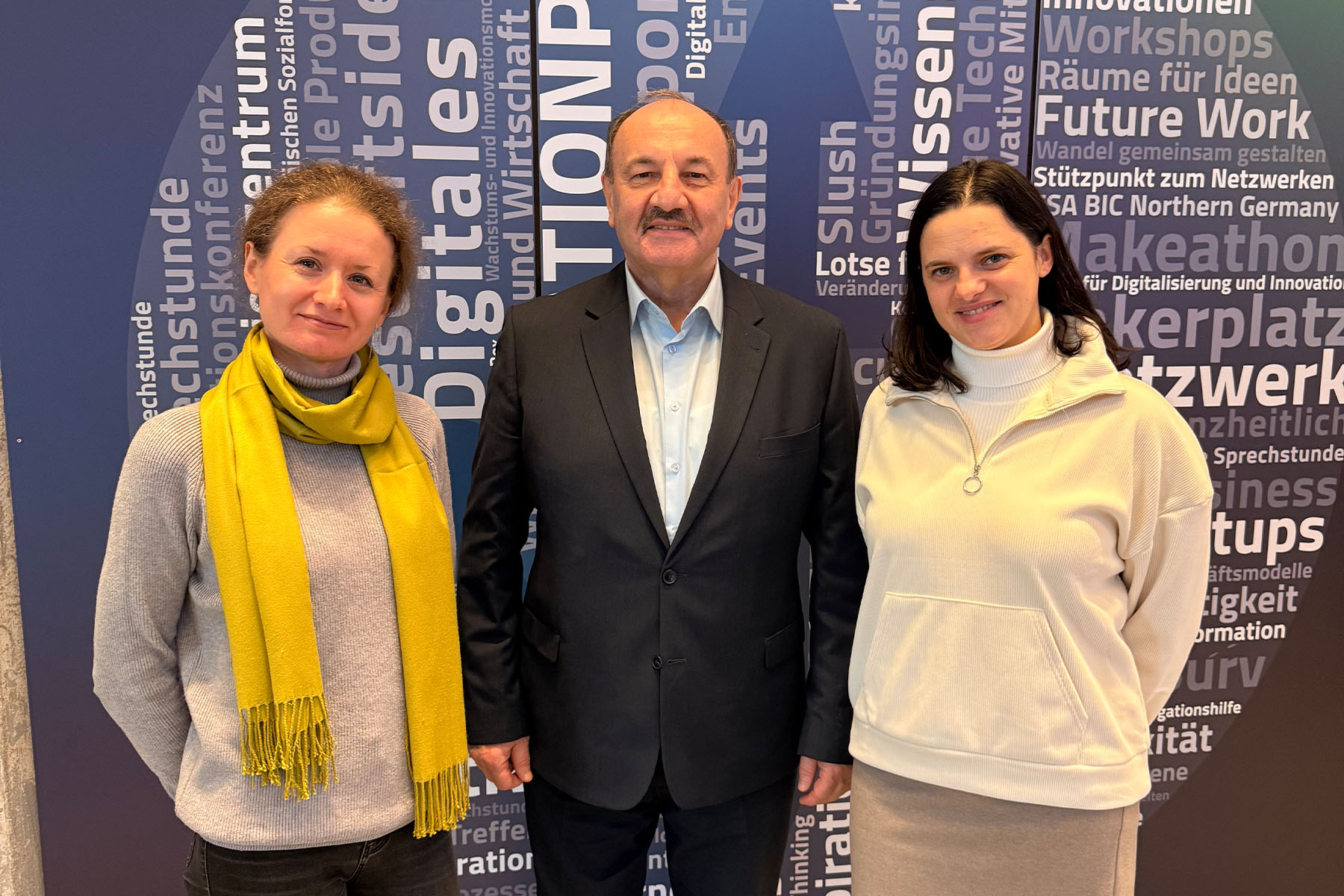
A total of 18 representatives from universities in Ukraine and Moldova took part in the mobility. NTU was represented by:
- Viktor Danchuk – Professor of the Department of Information and Analytical Activities and Information Security;
- Inna Vyhovska – Associate Professor of the Department of Transport Systems and Road Safety;
- Nataliia Katrushenko – Senior Lecturer of the Department of International Transportation and Customs Control.
Study of Innovative European Micro-Accreditation Models and Their Integration Strategies
The training programme covered a wide range of topics that combined educational innovations, modern transport policy, digital urban infrastructure, industrial and start-up ecosystems, as well as high-tech simulation complexes of the maritime industry.
During the first days, the participants worked in the HSW Library, where Professor Norbert Grünwald delivered comprehensive lectures on the global development of micro-credits, including the experience of the EU, the USA, Canada, and New Zealand. The sessions provided an in-depth analysis of the structure of the European Framework for Micro-Qualifications, the specifics of integrating short modules into the ECTS system, the requirements for transparency of learning outcomes, as well as the principles of quality assurance and mutual recognition of micro-qualifications across EU countries.
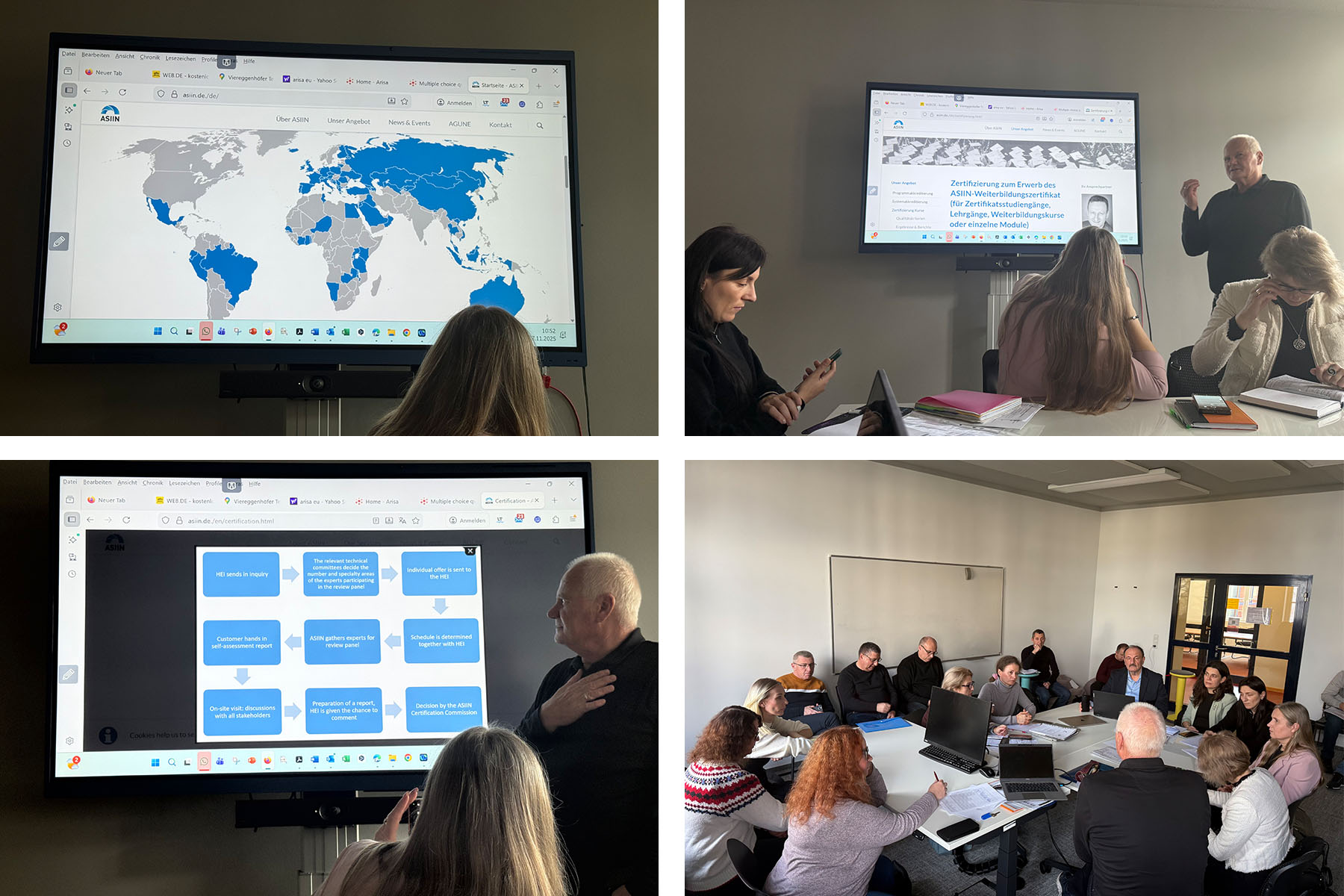
Representatives of universities from Ukraine and Moldova were shown how formal and non-formal education are integrated in Germany: micro-modules are developed not only by universities but also by companies, municipalities, and business associations, and their learning outcomes are recorded in digital systems such as Open Badge, which enables the automated recognition of learning achievements. The discussion also addressed the potential for implementing such approaches in Ukraine through the renewal of higher education standards, the improvement of accreditation procedures, and the integration of micro-credits into the digital ecosystem of the university.
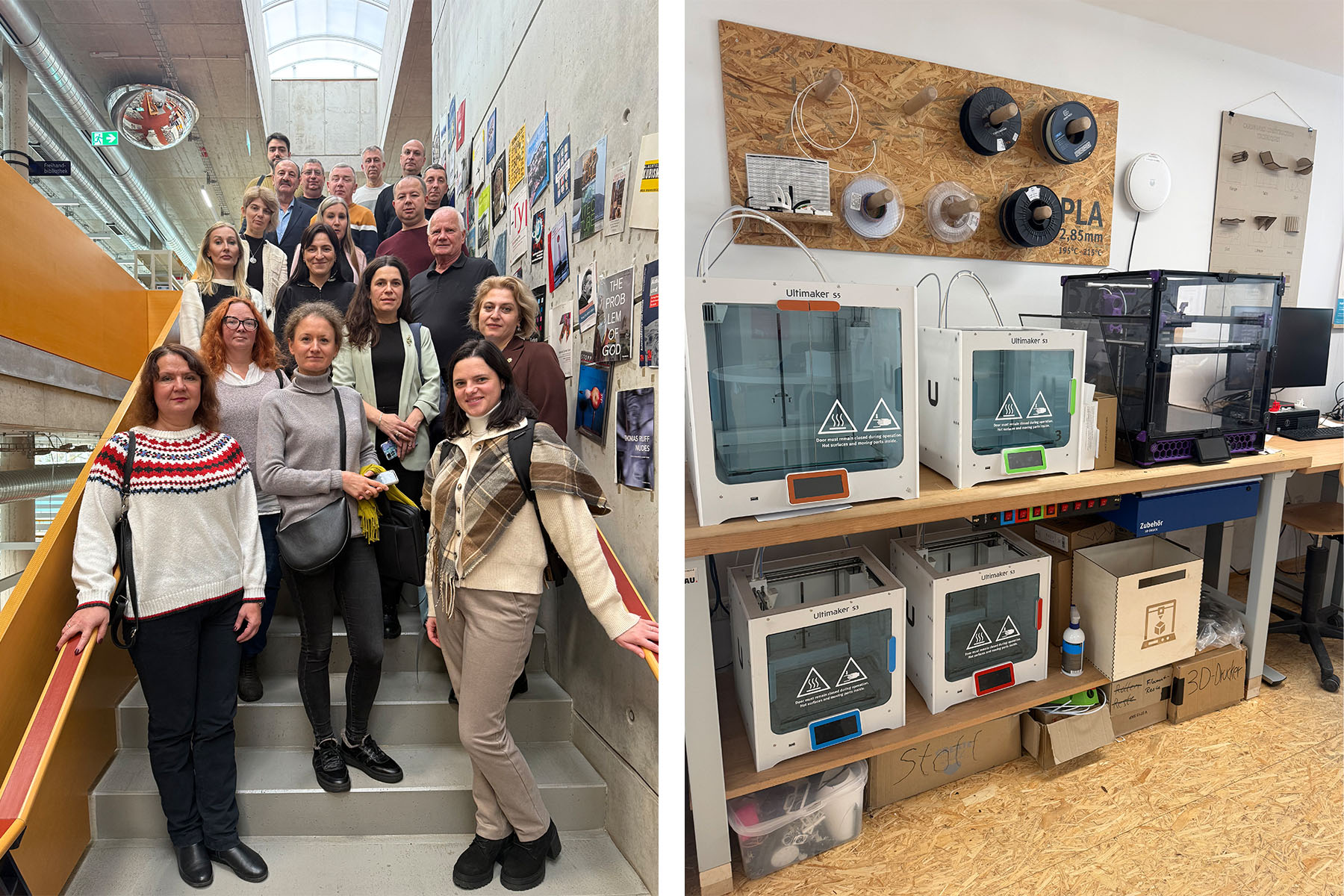
Special attention was given to exploring the university’s technological laboratories — StartUpYard and Makerspace — which serve as centres for developing practical skills and fostering students’ entrepreneurial activity. In the Makerspace, participants were shown how students work with modern equipment such as 3D printing (PLA, ABS, composite materials), laser cutting, electronic module prototyping, microcontrollers, and robotics. Of particular interest was the model of integrating these laboratories into the educational process: students undertake not only individual projects but also team-based assignments related to real industry challenges. Representatives of the universities observed how interdisciplinary learning is formed, where transport-related majors interact with IT, design, mechanical engineering, and project management.
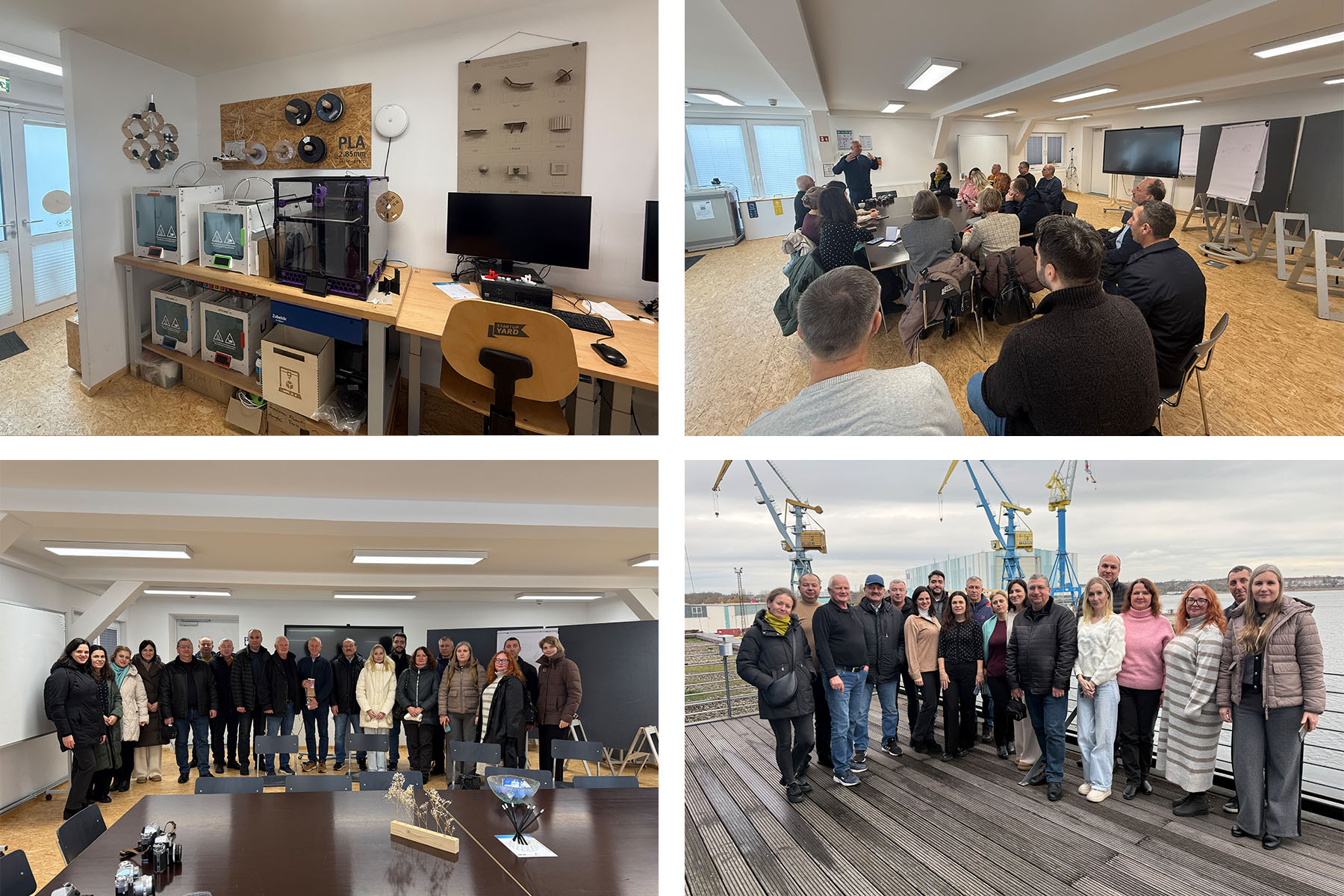
 A highlight of the technological infrastructure of the city was the visit to InnovationPort – Digital Innovation Centre Wismar, which combines a start-up incubator, research laboratories, and a presentation space for digital solutions. Here, participants were introduced to a model in which local IT companies, transport operators, industrial enterprises, and the university collaborate through partnership-based innovation.
Several case studies were presented, including:
- the digitalisation of logistics processes in the Port of Wismar,
- mobile sensing platforms for transport monitoring,
- the use of artificial intelligence for forecasting transport system loads,
- the implementation of open urban data (Open Data) to support sustainable transport planning.
Significant attention was also given to the interaction between students and businesses: many micro-modules in Wismar are developed based on solutions created within InnovationPort.
During an official meeting with the Mayor of Wismar, Thomas Beyer, participants received an in-depth presentation on the city’s transport policy and sustainable development strategies. It was demonstrated how a small historic city can implement effective transport management. The presentation outlined:
- the new urban transport concept aimed at reducing transit traffic in the historic centre;
- the development programme for cycling and pedestrian routes;
- the integration of digital tools into the public transport system;
- support for autonomous and low-carbon mobility projects;
- mobility management algorithms for mass events in the port and city centre;
- mechanisms for engaging the public in decision-making.
Special attention was paid to the fact that Wismar is a UNESCO World Heritage city, and transport planning must therefore consider the preservation of historic architecture, restrictions on heavy vehicle traffic, and the needs of the tourism sector.
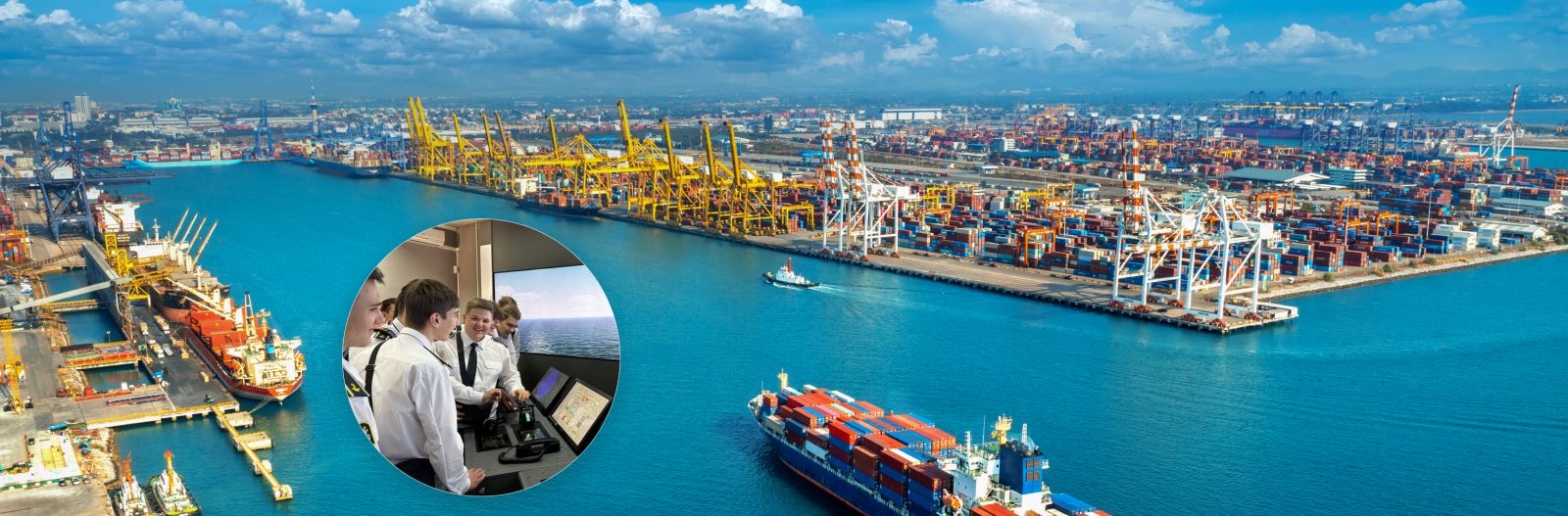
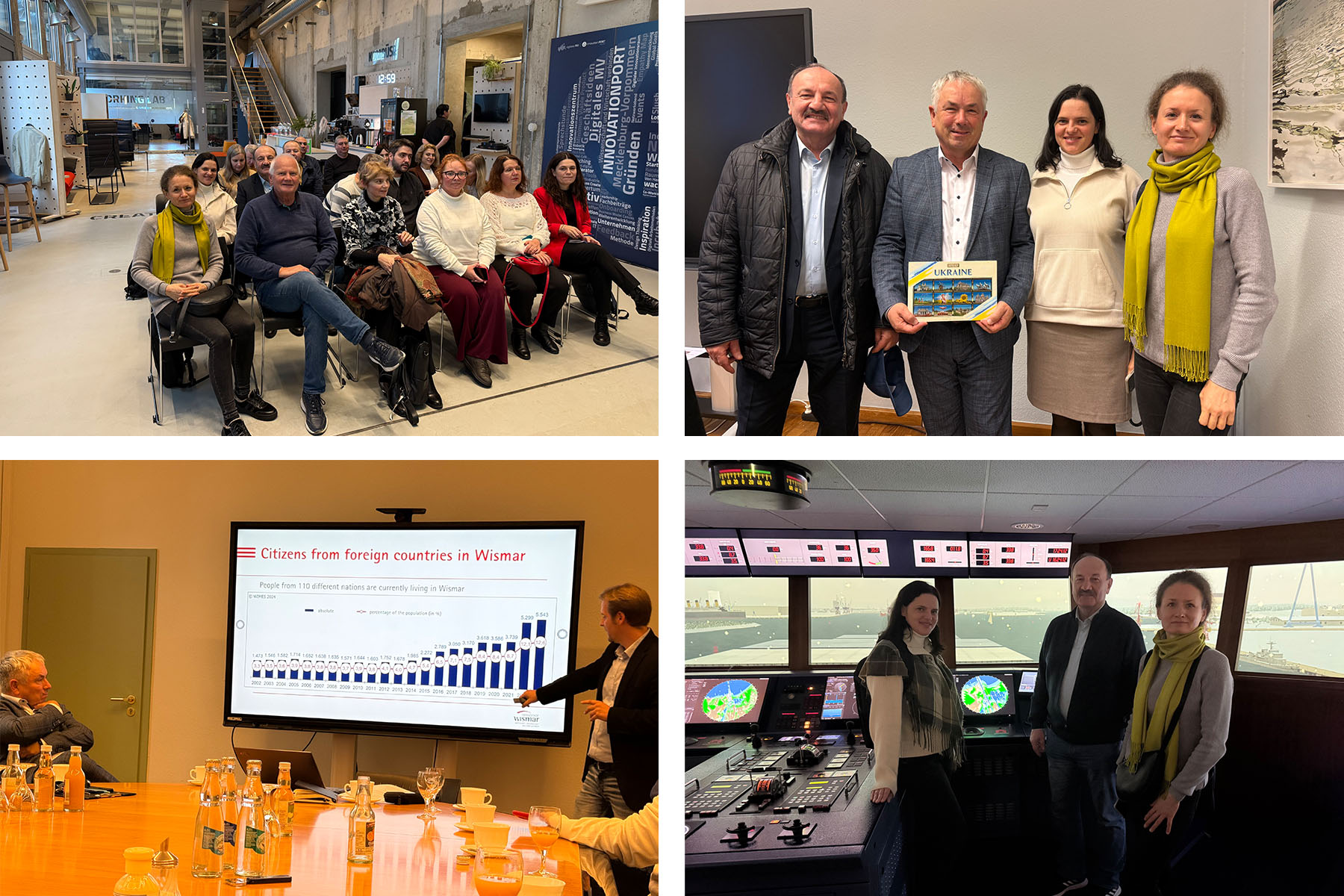
The final day of the mobility was dedicated to a visit to the Maritime Simulation Centre Warnemünde (MSCW), where the participants had the opportunity to explore professional training technologies used in the maritime industry. The group visited all three main simulation complexes:
- the bridge ship-handling simulator, which recreates realistic navigation conditions—from storms and dense fog to heavy traffic in narrow marine channels;
- the engine room simulator, which enables modelling of engine performance, electrical systems, emergency scenarios, and equipment malfunctions;
- the Vessel Traffic Service (VTS) simulator, which replicates the operations of maritime traffic control centres.
The participants were able to observe how all simulators integrate into a single system allowing for the reproduction of complex interaction scenarios involving ships, shore-based services, and technical systems.
This day proved especially valuable for representatives of transport-related disciplines, as it showcased best practices in digital modelling, risk management, operator training, and crew performance analysis in critical situations
The participation of NTU representatives in the mobility programme in Wismar became an important step in strengthening the university’s international cooperation, modernising the content of educational programmes, and implementing new models of contemporary transport education.
The results achieved will make it possible to:
- expand the use of micro-qualifications within the educational process;
- integrate digital innovations and industry cases into bachelor’s programmes;
- develop partnerships with European universities and companies;
- enhance the approach to forming competencies in the fields of sustainable transport and smart mobility;
increase the involvement of NTU students and academic staff in international educational and research initiatives.